Topics and format of program
In-person class (the program can be implemented in a learning environment suitable for the target audience, adapting the object of study and practical tasks to the specific context of the venue; accessibility of a cultural-historical object is not a mandatory prerequisite for program implementation, but is desirable). (5 h )
Professionals in education, culture, youth, non-governmental, and public sectors, adult and
non-formal educators, as well as other interested parties who implement learning, inquiry, project, and community
engagement activities in their professional or social work.
How to use local environmental resources to create a meaningful, exploratory, and creative project-based learning experience?
- Promote participants’ understanding of the essence and core principles of project-based learning and its differences
from traditional project work. - Improve the ability to use the key elements of project-based learning, including formulating a meaningful driving
question for the project. - Develop the skill to use the local and authentic environment as a resource for creating a project-based learning
concept, recognizing opportunities for exploration and interdisciplinary learning. - Enhance the ability to provide and use feedback to refine the project concept and determine the first step towards its
implementation in professional practice.
Essence, core principles, and key elements of project-based learning. Formulating the project’s driving question.
Utilizing the local and authentic environment in the project-based learning process. Opportunities for inquiry and
interdisciplinary learning. Developing a project concept, result, and real audience. Feedback and project concept
refinement. Transferring project-based learning experience into professional practice.
Participants gain practical experience and tools to design and execute authentic project-based learning initiatives
tailored to their professional context.
800 EUR (up to 60 participants).
Included: Initial information gathering and adaptation of training content to client needs; training materials;
consultations during training; after the training – electronic materials.
If the training location is more than 150 km from the trainer’s location or overnight stay is required, travel and accommodation expenses are
agreed upon separately.
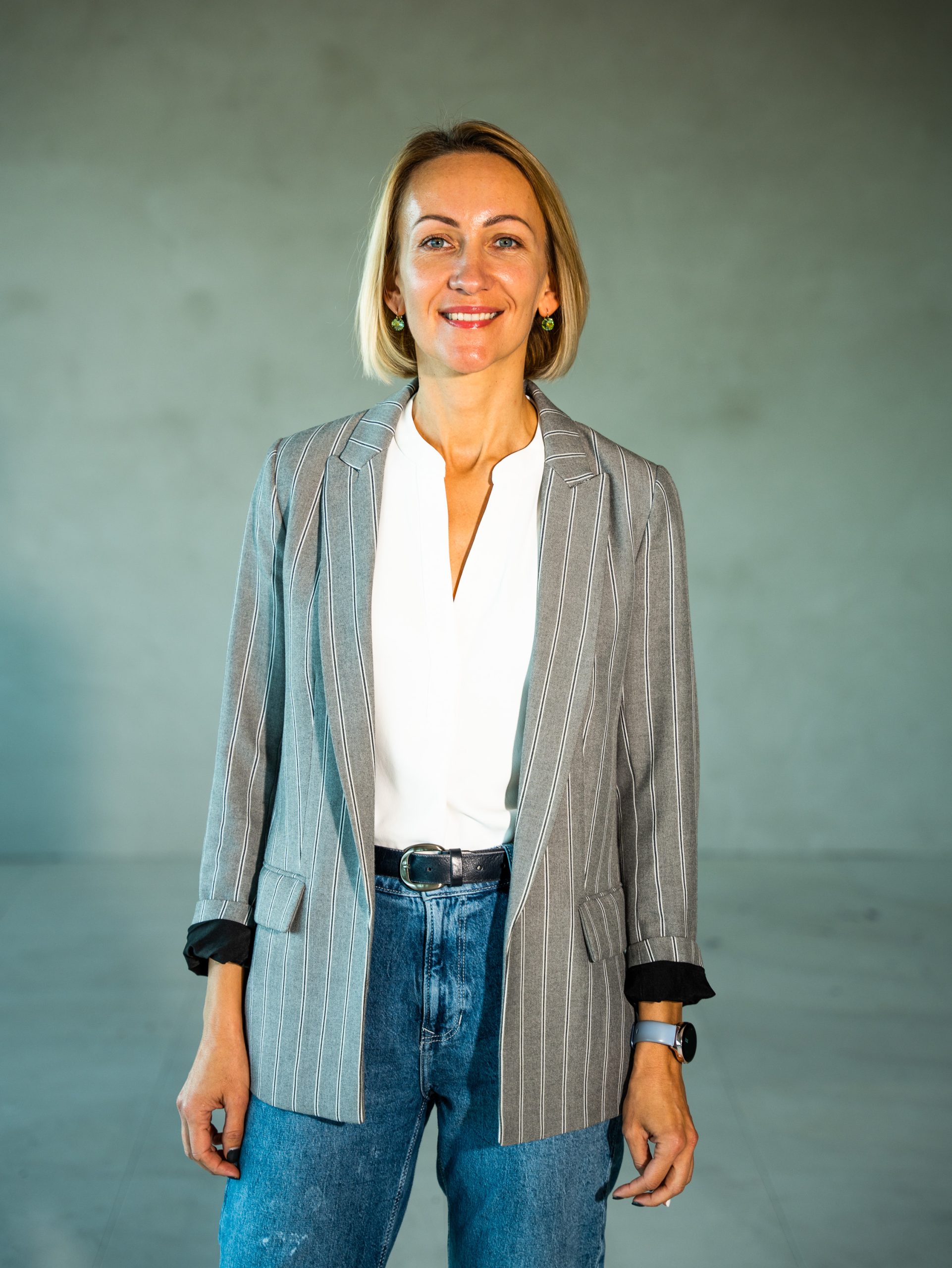
Trainer
Simona Sniķe
Tourism, destination development, and management expert, trainer and seminar
leader, project manager, and consultant.
Time
Activity
Tasks
Format
Methods
15 Min
Introduction and program context
Introduce program goals and the central question. Update
participants’ prior experience in implementing project and learning activities.
Individual work,
group discussion
Updating experience,
questions, short
discussion
20 Min
Essence and core principles of project- based learning
Promote understanding of the
essence of project-based learning and its differences from traditional project work. Learn key elements of project-based learning and the
trainer’s role in guiding the learning process.
Presentation,
individual reflection,
discussion
Theoretical
explanation, case
analysis, exchange of
views
30 Min
Exploration of the local
and authentic
environment
Explore the venue and its
surroundings as a potential learning resource. Notice and select one aspect – problem, contradiction,
surprise, opportunity, challenge, success story, or another question
significant for investigation. Record observations in sections: We see –
We think – We wonder.
Small group work,
environmental
exploration
Observation, “See-Think-Wonder” exploration
20 Min
Formulating the project’s
driving question
Select and formulate one project driving question from the issues
identified during exploration.
Evaluate whether it is open-ended, authentic, engaging, tied to participant or target group needs,
and encourages exploration,
thinking, and creation.
Group work
Formulating and
evaluating questions
against criteria
30 Min
Break
Informal exchange of experience and ideas
40 Min
Developing a project-
based learning concept
Develop a prototype of the project concept based on the selected driving question. Determine the authentic context, research opportunities, interdisciplinary
collaboration possibilities,
participant choices, potential output, practical application, and real audience.
Group work
Designing, structuring
ideas, co-creation
40 Min
Testing and refining the
project concept
Present the project concept to another team, receive structured feedback, and use it to refine the
concept. Identify 3 positive
takeaways, 2 recommendations,
and 1 question in the feedback.
Pair team work
Mutual feedback “3– 2–1”, project refinement
25 Min
Project idea galleryProject idea gallery
Explore project concepts of other groups, evaluate their potential, and identify ideas that can be used or
adapted in one’s own professional practice. Emphasize participant
engagement, practical application, and the opportunity for the output to reach a real audience.
Individual work,
moving through the
idea gallery
Gallery method, sticky
note voting, exchange
of ideas
15 Min
Break
Informal exchange of experience and ideasInformal exchange of experience and ideas
30 Min
Evaluation of project
ideas and 60-second
microphone
Summarize project idea gallery ratings and identify ideas that received the most reactions. Three selected teams present the essence
of their project in 60 seconds: “Our driving question is…”; “Project participants will create…”; “And this will be needed for…”. Briefly discuss strengths of projects at the end.
Group work,
presenting, joint
reflection
Idea evaluation,
summarizing vote
results, “60-second
microphone”, brief
reflection
20 Min
Transfer of experience to
professional practice
Evaluate how project-based
learning principles can be applied in one’s own professional environment.
Individual work, pair
conversation
Reflection, exit ticket,
transfer of experience
15 Min
Final reflection and
summary
Summarize key takeaways
regarding project-based learning and its use across various professional environments.
Determine a specific first step for further development or
implementation of the project
concept.
Individual reflection
Closing circle,
reflection questions
Creative Task “From Image to Story”
Duration: 30 minutes
Goal: To develop participants’ attentiveness, visual thinking, interpretation skills, and the ability to use a
artwork or other visual object as a starting point for an exploratory and creative learning experience.
Process
Silent observation – Participants quietly observe the chosen image or artwork. At first, they do not comment
on anything and do not try to determine “what it is,” but focus on what is visible.
Colors, shapes, and lines – After silent observation, participants individually write down:
- what colors they notice;
- what shapes they see;
- what lines or directions they observe;
- which part of the image attracts the most attention.
Fragment sketch – Each person chooses one fragment of the image that attracted attention and freely
sketches it. Drawing skills are not evaluated; attentive observation and justification of choice are key.
Title and interpretation – Participants create their own title for the artwork and briefly write down:
- why this specific title was chosen;
- what feeling, idea, or story the artwork evokes in them.
Sharing in pairs or small groups – Participants show their sketch and title, briefly explaining what they
noticed and how they arrived at their interpretation.
Joint reflection – Discuss:
- what silent observation helped to reveal;
- how interpretations differed among participants;
- how such a method can be used in the project-based learning process, for example, as a starting point for
exploration, formulating questions, or project ideas.
Required Materials
One visual object or image, A4 or A5 paper sheets, writing utensils, and pencils.
Additional Possibility:
Link the visual thinking task with the training program “Project-Based Learning Experience” by encouraging
participants to formulate a possible project driving question based on their observations and interpretations.
Creative Task “10 Photographs – Place as a Learning Resource”
Duration: 50 minutes
Goal: To practically experience how to use the local and authentic environment as a resource for creating an
exploratory and creative learning experience; to notice problems, opportunities, surprises, contradictions, and
questions significant for research within the environment.
Process
Exploration of the place – Individually walk around the training venue (both indoors and outdoors, if the learning
environment and weather conditions allow) and take 10 different photographs of your own choice.
Photograph what catches your attention, raises questions, surprises, or seems significant. Do not search for
“correct” objects, but allow yourself a personal perspective on the place.
Processing photographs in groups – Form groups of 3-4 participants and:
- Classify the taken photographs into 2-4 self-selected categories.
- Compare what multiple participants noticed similarly and what was noticed by only one.
- Choose 3 photographs that show the greatest potential for creating a learning experience.
Find commonalities and differences – Compare the three selected photographs and find at least three common
and three different features. Discuss what these similarities and differences allow you to notice or understand about
the specific place. Select one aspect worth learning more about.
What do these images have in common? What is different? Why could this be significant? What else would you like
to find out about it?
Create a potential solution – From what was noticed in step 3, select one problem, challenge, contradiction, or
opportunity and imagine a potential solution, discussing:
- what could be changed, improved, preserved, highlighted, or made more understandable to others in this place;
- to whom this would be significant;
- what could be created or done to improve the situation.
At the end, formulate one open question that would lead from the specific observation to further research and
creation.
From photograph to learning idea – Each group presents one learning idea sketch that originated from the
exploration of the place.
In the presentation:
- show 1–3 photographs that best describe the chosen problem, opportunity, or challenge;
- state the formulated open question;
- propose what could be explored, created, or solved;
- determine to whom the created result could be useful or interesting.
Joint reflection – Discuss:
- what exploring the place by taking 10 photographs helped to reveal;
- how interpretations differed among participants;
- how such a method can be used in the project-based learning process, for example, as a starting point for
exploration, formulating questions, or project ideas.
Required Materials
Phone with a camera, paper/notes.
Additional Possibility:
Link the visual thinking task with the training program “Project-Based Learning Experience” by encouraging
participants to formulate a possible project driving question based on their observations and interpretations.